Main menu:


Site search

Categories

Archive

July 2008
M T W T F S S
« Jun    
 123456
78910111213
14151617181920
21222324252627
28293031  
Award-winning Writer/Filmmaker Donald L. Vasicek's dream is to create awareness by documenting the Sand Creek Massacre. The Centennial, Colorado filmmaker/writer has worked for numerous years, using his money to produce a feature documentary film about the Sand Creek Massacre. Below is his award-winning six-minute film, which is the prototype for the feature. Contact Don for information about how you can be part of this compelling film project.
Bookmark and Share


“Dachau and Anne Frank Stun Award-Winning Sand Creek Massacre Filmmaker”

June 18, 2008 – Centennial, CO – Donald L. Vasicek, award-winning writer/
filmmaker for the Sand Creek Massacre documentary film recently traveled to
Europe.  Amongst his stops was Dachau, a Nazi concentration camp about nine
miles or fifteen kilometers northwest of Munich.  Vasicek, known for his campaign
to educate others about American native people, nevertheless, was stunned by
what he saw and experienced at Dachau and in Anne Frank’s house in Amsterdam.
Part of his notes are as follows:

“To escape from Dachau, one had to sprint across an eight-foot wide
strip of grass.  The grass was nurtured there for prisoners  It encircled
the interior of the camp.  If one stepped on the grass, they were shot.  If
one made it past  the grass to a v-shaped cement moat that also surrounded
the interior of the camp, they had to scamper down into the moat, up the other
side of it to barbed wire that was spread on up-sloping ground.  An, at least
ten-foot high electric fence with barbed wire curled on top of it like large circles
drawn with barbed spikes on it, was the last barrier to escape from a place
where an estimated 50,000 human beings were murdered.

As I toured the camp and listened to the tour guide’s description of the camp,
what was there, and what is presently there and why, I felt like I had stepped
into the past.  All of the books I had read,  all of the movies and documentary films
I had seen, all of what I had learned about that horrific time, came to the surface there.  I got a
dose of reality.  I could feel the terror, the pain, and the sorrow.  I constantly
asked myself, how could anyone create such a horrifying place?  I was stunned
to realize how real Dachau had been, how much hate had been generated to mask
the reality of breathing human beings.

When I walked up to the crematorium, I traced the steps of prisoners who could
no longer work or work, like women, children, elders, the sick, prisoners who were gay,
prisoners who were gypsies and other “throwaways”, as Nazis often called them.

The first room was the room where prisoners had to strip themselves naked.  Then, they
walked to the next room, which had a lower ceiling than the rooms in the rest of the building
and no windows.  They were told they were going to take showers, but instead, poison
pellets were dropped into the room in two hinged box-like containers in one wall that
were filled with the pellets from outside of the building.

Think about that.  Just think about that.

The next room was the crematorium.  I stood in front of the ovens as the tour guide
explained that towards the end of the war (World War II), the Nazis escalated the job, or
as they called, the final solution.  They backlogged at Dachau.  The tour guide showed us
how bodies were piled up, both inside and outside of the crematorium waiting to be
burned.  Pictures taken at the time were prominent there.

I stepped back from the photos.  I realized that anywhere I stepped, I stepped where
Nazis and people condemned to death by ignorance had either once stood, or lay.  I
know I am unique, different, because there is no one else who is me.  I just don’t like
the idea that killing is a solution to solving problems.  Genocide is ignorance based on
fear.  And according to some, fear is the second most powerful human emotion next to love.

The tour guide mentioned that the German people, as recent as 1999, had decided to
“come out” with their horrific past.  German children are now required to study World War II
Nazism and come to the camps to learn.  The tour guide said the reason the German people
had waited so long to “come out” was because of their shame for the
terror  and devastation the Nazis had perpetuated on millions of others.

It is time, now, for the American people to do the same thing.  We must come out
of our shame and stop genocide in America.  That is the very least we can
do for the native people of America.  Our children must learn about native people,
their cultures, their history, and who they are as human beings so that they can relate
to them as human beings.

No one is better than anyone else regardless of achievements, social standing, religion ,
culture, race and/or material wealth. We are one because  we are human.  We are a collectiveness
consciousness.  When we hurt someone, we  damage that consciousness.  This, in turn, causes
all human beings to lose some of the positive energy this kind of
consciousness brings to each one of us.  .

If one isn’t convinced, walk in the hidden recesses of a building next to Princes Gracht Canal
in Amsterdam where thirteen year-old Anne Frank hid from the Nazis with her family for three
years until they were betrayed and sent to camps. Walk in the rooms.
I did.  Guess what?  Anne Frank was a talented girl, a writer, a young person with
dreams and goals.  A Jewish girl who loved her family more than anything else
in her world.  A human being.

Feel her there.  Feel the terror.  Anne Frank, at age sixteen, died from typhoid in a concentration
camp because of ignorance fueled by fear.  Genocide in its finest form.

Then, there is the Sand Creek Massacre.  I’ve been at the site several times.  Sat in the grass
by Sand Creek, camera in hand, alone, recording sounds, the sun warm on my back.  I felt like
others were there.  You know, invisible, but there.  Perhaps apparitions, if I looked hard enough.
On November 29, 1964, there were over five-hundred Cheyenne lodges there, perhaps a thousand
or so Cheyenne people, seven-hundred soldiers, their horses, their equipment, their canons,
their guns, their sabers, and Indian dogs and horses.  Their ignorance.  Their fear.  Their  hate.
And there was murder there.  Rape. Mutilations.  Carnage.

There is a prominent person who has done work at the Sand Creek Massacre Site.  I asked
her if she ever “felt” anything while she was there doing her work.  She said, “No, not really, but I’ll
never go out to the site at night.”  I asked her why.  She said, “I don’t know why, I just won’t go.”

You might want to check it out, see how it makes you feel.  Perhaps it can remove you,
even for a moment, from your reality and plunge you in the depths of losing sight of who
human beings, all human beings really are, human beings, just like you and me.

####

Contact:

Donald L. Vasicek
Olympus Films+, LLC
http://www.donvasicek.com
dvasicek@earthlink.net
303-903-2103

Award-Winning Writer/Filmmaker Donald L. Vasicek Launches New Sand Creek Massacre Website

FOR IMMEDIATE RELEASE

“Award-Winning Writer/Filmmaker Donald L. Vasicek Launches New Sand Creek Massacre Website”

May 21, 2008 — CENTENNIAL, CO — Award-winning filmmaker, Donald L.
Vasicek, has launched a new Sand Creek Massacre website.  Titled, “The Sand Creek Massacre”, the site contains in depth witness accounts of the massacre, the award-winning Sand Creek Massacre trailer for viewing, the award-winning Sand Creek Massacre documentary short for viewing, the story of the Sand Creek Massacre, and a Shop to purchase Sand Creek Massacre DVD’s and lesson
plans including the award-winning documentary film/educational DVD.

Vasicek, a board member of The American Indian Genocide Museum (www.aigenom.com)in Houston, Texas, said, “The website was launched to inform, to educate, and to provide educators, historians, students and all others the accessibility to the Sand Creek Massacre story.”

The link/URL to the website is sandcreekmassacre.net.
###

Contact:
Donald L. Vasicek
Olympus Films+, LLC
http://www.donvasicek.com
dvasicek@earthlink.net

“The Man With The Black Eyes” by Donald L. Vasicek

A tall, thin man, maybe 50’s, long, shiny dark hair cascading down over his shoulders, with a set of black pupils that blazed like fire as he addressed me. “Tell the real truth. The Cheyennes were a murderous bunch who got what they deserved at Sand Creek.”

I realized this man could move with the speed of a bullet and that he had a knife in his coat as sharp as a new razor blade.

“Listen,” I said, “It doesn’t matter what the Cheyennes did before or after the Sand Creek Massacre. What matters is that at Sand Creek, they were raped, shot, knifed, mutilated, decapitated, executed, hung, and murdered. That is what my story is about, sir.”

We were at a Hollywood bash, something that makes my stomach queasy, for some reason.

The fat-free native man pushed his deerskin coat open. The handle of his pearl-handled Bowie knife in a leather holster in his waistband glistened off the large chandelier just above us.

“You’re just as bad as they are.”

“I assume they means the Cheyenne people.”

“I’m not talking Greek to you.”

“You’re a lecturer, an actor, a writer, and a couple of other things, right? ‘Dances with Wolves.’ ‘Far And Away’, ‘Geronimo,’ ‘Crazy Horse’, ‘Return To Lonesome Dove,’ ‘Deadmans Walk’, ‘Indian In The Cupboard’, ‘The Postman’, ‘Last Of The Dogmen’ ‘Last of the Mohicans.’ ” I searched him for a reaction. His black pupils leapt at me.

“Yeah, got some mileage in the business. So…”

“How would you feel if I told you how to do your work?”

“No one can tell me how to do my work.”

“I will tell you that when I finish the “Ghosts of Sand Creek” production, I want you to call me. I will want to see if you’ve learned any lessons since then.”

I shook his hand firmly. His felt like a rock.

-Donald L. Vasicek, The Writer/Filmmaker Whisperer, Olympus Films+, LLC, http://www.donvasicek.com, dvasicek@earthlink.net

“Sand Creek Massacre filmmaker radio interview blasts Bush”

FOR IMMEDIATE RELEASE

“Sand Creek Massacre filmmaker radio interview blasts Bush ”

May 13, 2007 — CENTENNIAL, CO — Award-winning filmmaker, Donald L.
Vasicek’s interview about his award-winning film, “The Sand Creek
Massacre”, will be aired in two parts on CFWE Radio in Edmonton,
Alberta, Canada.

The CFWE.ca website broadcasts on a five second
delay from the main feed at http://ammsa.com/cfwe/.

Part 1 will air on:

May 13 at 10:45 a.m.
May 14 at 1:45 p.m.,
May 15 at 2:00 p.m.

Part 2 will air on:

May 20 at 10:45 a.m.
May 21 at 1:45 p.m.
May 22 at 2:00 p.m.

The interview gives a detailed view into the Sand Creek Massacre
from the filmmaker’s point of view. It also sears President Bush about
“his ignorance”.

“To utilize killing as a means for solving cultural differences is
genocide,
and killing is murder, not a solution,” Vasicek says.

Vasicek’s SandCreekMassacre.net web site provides detailed information
about the Sand Creek Massacre including witness accounts, still
images, videos, etc.

###

Contact:

Donald L. Vasicek
Olympus Films+, LLC
http://www.donvasicek.com
dvasicek@earthlink.net

“Sand Creek Massacre film aimed to screen at Jackson Hole Film Festival”

FOR IMMEDIATE RELEASE

“Sand Creek Massacre film aimed to screen at Jackson Hole Film Festival”

May 8, 2008 — CENTENNIAL, CO — “The Sand Creek Massacre”, an award-winning film
as told from the perspective of the Cheyenne and Arapaho people, has been accepted
as an entry in the MovieHatch.com online competition. The top selection will be put into
production of up to $5,000,000 for a film, and a $1,000,000 production budget
for a tv show. There will also be screenings at the Jackson Hole Film Festival for the final
film production June 5-9, 2008.

Award-winning writer/filmmaker Donald L. Vasicek, the producer of “The Sand Creek
Massacre”, says this is a wonderful opportunity to help create awareness for all
native people and to share in an educational journey for everyone.”

One simply needs to go to http://moviehatch.com/jackson/, view the film, click on
vote and click on the number of stars you want to give it. That’s all there is to it
and it gives you an opportunity to participate in this compelling film project.

Vasicek added, “If ‘The Sand Creek Massacre’ wins, I will put a feature film
about the Sand Creek Massacre into production and also a mini-series
about the Sand Creek Massacre. Get out there and vote folks and pass
the word along to all others including your kids.”

Sandcreekmassacre.net provides detailed information about the Sand Creek Massacre
including the award-winning six-minute Sand Creek Massacre short film and
a variety of still images, witness accounts, video and commentary about the Sand Creek Massacre.

Olympus Films+, LLC is dedicated to writing and producing quality products that serve
to educate others about the human condition.

Contact:

Donald L. Vasicek
The Writer/Filmmaker Whisperer
Olympus Films+, LLC
http://www.donvasicek.com
dvasicek@earthlink.net
303-903-2103
###

“Sand Creek Massacre story hits air waves”

“From an early age the majority of Americans have imprinted on their brain the image of the ’savage’ Indian. In any textbook, the Indian is portrayed hostile and ready to take a life. From books, paintings, and Hollywood movies, one can easily come across the image. This image was used to dehumanize a group of
people in order to justify taking their lives for land. Unfortunately, this disturbing portrayal of the Native American people has been accepted and promoted in our educational system and entertainment industry.
When one race is portrayed only in the positive, at the same time another race is portrayed only in the negative. It is imperative to recognize these racist and stereotypical portrayals and correct it by teaching the truth. American Indians are people, not, mascots, not savages, not an option for a Halloween costume.”

Thoughts from the Producer, Donald L. Vasicek

When I walk at Sand Creek today, I step carefully.

My size ten and a halves sink into the sand. Where there is grass or plants, Canadian thistle or tamarisk or sage or some other one of the numerous types of grass and plants at Sand Creek, it catches my clod hoppers, just before they sink into the sand.

Stepping beside the gnarled and stately cottonwood trees, roots feel hard under my Reeboks. The roots catch my feet, perhaps, like guardian angels, but yet, possibly parts of human remains. I know not where to take the next step, or how.

I fear that I will step on someone who died here, whose remains are permanent parts of the sand, the grass, and the trees. I wonder if I am walking in the buffalo wallow where this woman died. I step carefully because I feel the people who died here reaching out for me and I can’t see or hear them. I don’t know how to help them. I feel their presence, their fear, their terror, their disbelief, their helplessness to save their children, their husbands and wives, their disabled relatives, their parents and their grandparents.

Just like when I sat on a curb at Ground Zero in Manhattan two weeks after 9/11, I grieve for them. I grieve for myself. I grieve because I am alive and they died agonizing deaths. I grieve because I am helpless to give something to these victims to neutralize their agony, perhaps even, to reverse their deaths.

I turn and scan the horizon. It appears like it is overlooking the Sand Creek Massacre Site. Somehow, it makes me feel better, at the least, for the moment. Then, I have to move forward. I look down and wonder, where should I place my foot next?

~Donald L. Vasicek, Writer/Filmmaker, Olympus Films+, LLC

Witness Account

The Sand Creek Massacre Witness Account:

One Story of Horror At Sand Creek Duncan Kerr, the scout, found the body of One Eye lying near the camp.

“Some of the boys had scalped him, ” Kerr wrote, “but they either did not understand how to take a scalp, or their knives were very dull, for they had commenced to take the scalp off at the top of the head, and torn a strip down to the middle of the neck.”

A short distance beyond, he found One Eye’s wife sitting alone in a buffalo wallow: “I went up to her and laid my hand on her head. She looked up quietly, and recognizing me said; ‘How de do Dunk, me heap dry. Gib me some water.’

I asked in the Cheyenne language, if she was seriously hurt. She replied by throwing the blanket back and showing me aghastly wound in her side, through which the entrails were protruding. The wound must have been caused by a fragment of a shell.  I gave her a drink of water, and left my canteen. As I turned to leave, she took my hand to detain me, and begged me to shoot her with my gun….But I could not do it, for I had known her a long time; a lively, sprightly, mischievous, little thing, that fairly worshipped her Chief One Eye.

This is the squaw that One Eye brought into Ft. Lyon with him and was on our trip after the captives. When she saw I would not kill her she covered up her head and began singing her death song again….I had not gone very far, when I met a soldier.  I pointed her out to him, and told him I had just shot and wounded an Indian and had fired my last shot; that the Indian was badly wounded, and could not help himself, and I wanted him to creep up behind the Indian and shoot him in the back of the head. The fellow crept up close behind her and shot her dead….”Sand Creek: Tragedy and Symbol Pt. 1″ G.L.Roberts, 1984


Sand Creek
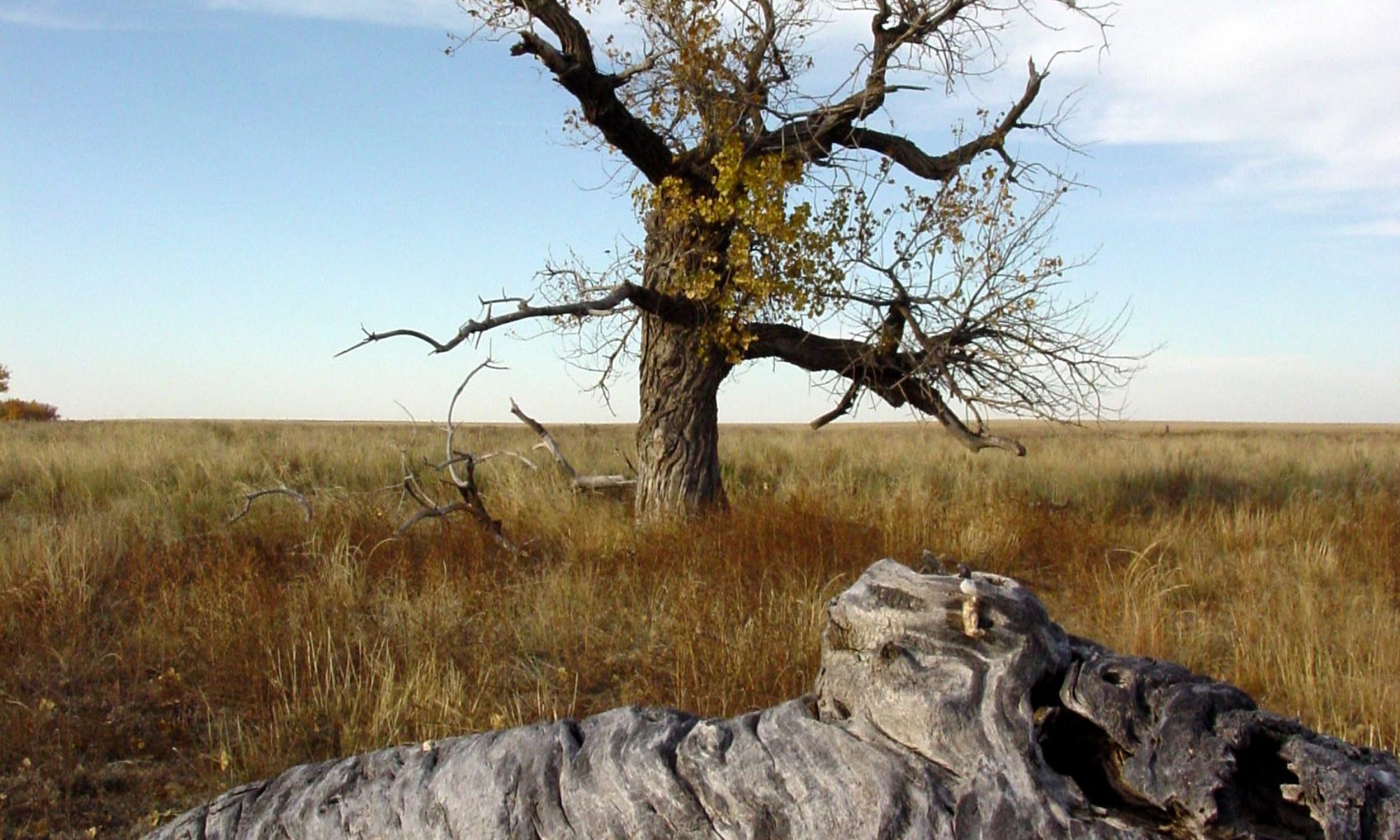
Sand Creek in southeastern Colorado

Sand Creek Massacre Site

 On November 29, 1864, 700 Colorado troops savagely slaughtered over 450 Cheyenne children, disabled, elders, and women in the southeastern Colorado Territory under its protection. This act became known as the Sand Creek Massacre. This film project (”The Sand Creek Massacre” documentary film project) is an examination of an open wound in the souls of the Cheyenne people as told from their perspective. This project chronicles that horrific 19th century event and its affect on the 21st century struggle for respectful coexistence between white and native plains cultures in the United States of America.